
Lesson 5.2: AI in Ethical Hacking
Level: Beginner | XP Awarded: 75 XP
Total Duration: 140 minutes
Certified: Yes | Gamified: Yes



AI-Powered Vulnerability Scanning
AI-powered vulnerability scanning is reshaping how cybersecurity professionals identify and patch weaknesses in digital infrastructure. Traditional scans were time-consuming, static, and prone to missing context-specific threats. Today, tools like Nessus AI, Intruder, and Qualys leverage adaptive machine learning models that dynamically update scanning algorithms based on real-world exploit trends and active threat intelligence.
What makes these tools so effective is their ability to learn from thousands of past attacks and incidents. For example, if a new remote code execution exploit is being used in the wild, an AI-enhanced scanner can immediately search for similar vulnerabilities in your clients’ environments even before a formal CVE is published. This dramatically reduces exposure windows and boosts client trust in your service.
AI scanners also go beyond simple detection. They prioritize vulnerabilities by severity, exploitability, asset value, and context. Instead of overwhelming clients with 100+ low-risk findings, you can deliver refined reports that highlight the top five issues that truly matter. This risk-based prioritization elevates your offering from “just another scan” to an enterprise-grade intelligence service.
Monetization Opportunities
Freelancers often begin with one-off vulnerability assessments, charging $500 for a basic website review to $2,000+ for full infrastructure audits. The real gold, however, lies in monthly vulnerability monitoring retainers. By offering continuous scanning, automatic patch recommendations, and follow-up reports, you can net $1,000+/client per month especially in regulated industries like finance, SaaS, and healthcare.
Visual reporting is another client-winning feature. Platforms like Intruder generate elegant dashboards that clearly show threat severity, affected systems, resolution timelines, and patch histories. These reports not only impress clients but also serve as internal documentation for audits, vendor due diligence, and board reviews.
Freelancers who package these services with simple branding and recurring updates can scale quickly. Even non-technical business owners understand the value of “ongoing threat detection” and will pay for peace of mind. Position your offer as proactive digital hygiene—a routine health check-up for their systems and you’ll increase conversions while building long-term, high-trust relationships.
🎉 Congratulations!
Well done on completing this task! You practiced translating a technical scan into clear, business-ready insights exactly what clients need to make decisions fast.
This exercise sharpened your ability to map findings to severity levels, recommend actionable tools (e.g., Wordfence, WP-CLI updates, Let’s Encrypt/TLS, SPF/DMARC, Stripe/PayPal hardening), and deliver a non‑technical summary with an upsell to monthly monitoring.
Your Task Recap:
You asked ORIGPT: “Simulate a vulnerability scan for a WordPress site with email and payment integrations. List threats, severity levels, tools to fix them, and provide a non-technical summary with an upsell suggestion.”
By completing this, you demonstrated how to turn scan outputs into a client-facing plan: prioritized risks, quick wins, and a path to recurring revenue via ongoing patching and monitoring.
Keep going each task builds your toolkit for delivering premium, white‑label security reports that convert into retainers.

Exploit Automation: From Vulnerability to Verified Risk
AI-powered exploit automation bridges the gap between theoretical findings and proven impact. Instead of stopping at “we found a flaw,” platforms like
Pentera, AttackIQ, and Faraday safely emulate attacker TTPs (phishing, SQLi, lateral movement, privilege escalation) to
confirm what’s exploitable without disrupting production.
Why It Matters
- Cuts noise: Validates which issues are truly exploitable, reducing false positives.
- Speaks business: Shows concrete impact (e.g., “simulated access to customer DB in 2 minutes”).
- Prioritizes fixes: Focuses teams on the shortest, highest-impact remediation paths.
Freelancer Workflow (Field‑Tested)
- Scope & Authorization: Define targets, maintenance windows, and guardrails in a signed ROE.
- Safe Emulation Setup: Point the tool at a sandbox/staging first; enable “safe mode” payloads for production.
- Run TTP Playbooks: Chain exploits (e.g., weak creds → lateral movement → data access) using built‑in or custom playbooks.
- Capture Evidence: Collect timestamps, command logs, exploit graphs, and affected assets.
- Auto‑Generate Report: Export an executive summary + technical appendix with prioritized fixes.
- Retest & Verify: After remediation, rerun the exact playbooks to prove closure.
Deliverables Clients Love
- Exploit Path Diagram: Visual of the attack chain and blast radius.
- Evidence Pack: Screenshots/logs proving exploit feasibility (sanitized).
- Top‑5 Fix List: Fastest actions to break the chain (patch, config, MFA, segmentation).
- Readiness Score: Before/after metrics from validation runs.
Packaging & Pricing Ideas
- Pilot Validation: $1,500–$3,500 one‑time (single app or subnet, 1–2 playbooks).
- Quarterly Exploit Drills: $750–$2,000/run with side‑by‑side “before/after” scorecards.
- Exploit‑as‑a‑Service Retainer: $900–$1,800/month (monthly validation, reports, and fix verification).
Safety & Ethics (Non‑Negotiable)
- Use written authorization (ROE) and change windows; prefer staging where possible.
- Enable non‑destructive payloads; throttle to protect critical systems.
- Immediately disclose impact privately; never retain client data beyond the engagement.
Pro Tip: Pair exploit validation with a “Fix & Verify” add‑on: you guide remediation, then re‑run the exact AI playbooks to prove the risk is gone a clear, premium upsell.
Freelancer Monetization: Turning Exploit Automation into Premium Revenue
For freelancers, AI-powered exploit validation isn’t just a technical service it’s a premium business offering. Clients pay for clarity, proof, and peace of mind. With the right packaging, this becomes one of the highest-ticket items in your cybersecurity portfolio.
Pricing Potential
- Enterprise Projects: $10,000+ per simulation with full reports (risk rankings, exploit chain narratives, remediation playbook).
- SMB Engagements: $1,500–$5,000 per test (web apps, SaaS platforms, WordPress/Shopify stores).
- Validation Retests: $750–$2,000 per retest (prove fixes are effective).
Upsell Pathways
- Patch Management: Bundle exploit proof with automated patching and monitoring retainers.
- Endpoint Protection: Offer Falcon, SentinelOne, or Bitdefender subscriptions after showing real exposure.
- Employee Training: Layer in phishing or red-team simulations to address human factors.
- Incident Response Retainers: Position yourself as the on-call fixer if real attacks occur.
From One-Off to Recurring
The power of exploit automation isn’t just proving problems it’s proving solutions. Every fix you validate gives you a reason to retest quarterly or biannually. This turns one-time projects into predictable, long-term revenue.
Positioning Tip
Don’t sell “exploit scans.” Sell proof of compromise risk and proof of fix success. This framing elevates you from technician to trusted strategic partner. You’re not just reporting problems you’re the expert who demonstrates, solves, and guarantees ongoing resilience.
🎉 Congratulations!
Well done on completing this task! You explored how to safely demonstrate an SQL injection scenario and translate the findings into clear, client-ready remediation steps.
This skill is crucial for consultants: it blends technical validation (proving real risk), safe testing practices (using reputable tools and non-production targets), and actionable guidance (prioritized fixes clients can implement immediately).
Your Task Recap:
You asked ORIGPT: “Simulate an SQL injection attack on a login form, explain what data is at risk, recommend a safe testing tool, and suggest next steps for client remediation.”
By completing this, you practiced demonstrating impact, recommending safe tools (e.g., OWASP ZAP/SQLMap in a test environment), and outlining concrete fixes like parameterized queries, least-privilege DB roles, WAF rules, and secure CI/CD checks.
Keep going packaging technical findings into clear, prioritized actions is what turns penetration testing into lasting client value.
Client Engagement Strategies
The success of your freelance cybersecurity business doesn’t just rely on technical skills it hinges on how well you present, package, and deliver your services. AI tools give you power, but packaging gives you profit.
Start by understanding your client’s mindset. Most business owners aren’t thinking in terms of “penetration testing” or “zero-day exploits.” They want peace of mind, clarity, and actionable insights.
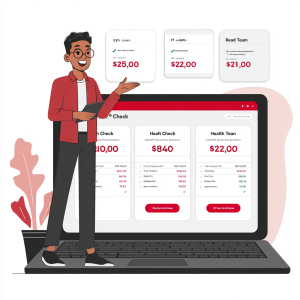
Entry-Level Offer – Security Health Check
- Reframe your pentest as a “Security Health Check.”
- Includes a scan of their infrastructure, prioritized recommendations, and a one-page summary.
- Pricing: $1,500 per audit.
- Perfect entry-point for non-technical business owners.
Premium Offer – Red Team Simulation
- Positioned for larger clients, high-risk industries, or IT-backed companies.
- Includes ethical attack simulations, real-time monitoring, threat modeling, and AI-generated remediation reports.
- Pricing: $5,000–$15,000 per engagement.
- Delivered with executive briefings and stakeholder-ready visuals.
You’re not just proving what could happen you’re preparing clients to act confidently. This shift elevates you from being “the IT tester” to becoming a trusted advisor and strategic partner.
Client Retention & Deal-Closing Strategy
To close deals, use email templates tailored to each niche (e.g., healthcare, fintech). Add personalized video walkthroughs showing demo dashboards or anonymized past results, and include visual Security Scorecards with risk summaries. These assets build confidence and boost conversions.
Beyond One-Time Projects
- Offer quarterly retesting contracts to maintain security posture.
- Deploy 24/7 monitoring dashboards with tools like Wazuh or SentinelOne.
- Create monthly intelligence bulletins for ongoing strategic value.
Retention Strategy – Peace of Mind Plan
- Deliverables: Continuous AI monitoring, branded reports, and emergency response.
- Add branding elements (your logo, signature, name on Slack alerts) for instant recognition.
- Position yourself as the first call when incidents occur.
Remember: clients don’t just pay for tools, they pay for trust and clarity. They renew when they feel supported, and they upgrade when they feel seen. Position yourself as the trusted guide for all things security, and referrals will follow.
🎉 Congratulations!
Well done on completing this task! You just explored how to package and pitch AI-powered security services using email campaigns tailored to client needs.
This task was especially valuable because it combined technical offerings (Health Check & Red Team Simulation) with sales strategy (upsells + retention tips) the exact mix freelancers need to turn cybersecurity expertise into long-term business success.
Your Task Recap:
You asked ORIGPT: “Write two friendly email pitches: one for a basic security health check and another for a red team AI simulation. Add upsells and a retention tip for an e-commerce business.”
By completing this, you identified how to frame services in plain language, add natural upsells, and include retention-focused messaging that locks in recurring value.
Keep refining each pitch builds your confidence as both a cybersecurity expert and a business strategist.
Lesson 5.2 Recap: AI in Ethical Hacking
This lesson explored how AI is transforming ethical hacking from a manual, time-consuming practice into a fast, scalable, and high-income skill set for freelancers. Traditional penetration testing required days to map networks, identify vulnerabilities, and simulate attacks. AI now automates those steps from vulnerability scanning to exploit simulation enabling even solo professionals to deliver enterprise-grade results.
We began with AI-powered vulnerability scanners like Nessus AI and Intruder, which detect misconfigurations, outdated software, and credential flaws using machine learning. These tools not only reduce false positives but also learn from emerging threats in real time, delivering actionable scan results in hours instead of days.
For freelancers, this creates clear monetization opportunities:
- One-time assessments – Quick vulnerability checks for fast ROI.
- Monthly monitoring services – Ongoing scans, prioritized alerts, and remediation advice.
Both models are attractive to businesses due to low delivery friction and the ability to show tangible value in reduced risk and compliance readiness.
Next, we moved into exploit automation. Tools like Pentera AI and Faraday simulate real-world attack behaviors to safely verify vulnerabilities without putting systems at risk. These platforms execute phishing simulations, injection attacks, and privilege escalations — then deliver visualized, client-friendly reports. This ability to demonstrate impact lets freelancers charge $5,000–$15,000+ per project, especially with enterprise clients who value proof, not guesswork.
We closed with client engagement strategies, emphasizing packaging over raw tools. You learned how to market services as “Security Health Checks” or “Red Team Simulations”, using branded templates, executive briefings, and video walkthroughs to convert leads and retain clients. The key is not just testing systems, but positioning yourself as a strategic partner who delivers clarity, trust, and long-term protection.
The big takeaway: AI doesn’t just make ethical hacking faster — it turns it into a repeatable, monetizable business model for freelancers who present it the right way.
🎉 Congratulations!
Well done on completing this task! You’ve just explored how AI can act as an ethical hacker, providing a sample audit with critical issues, simplified client explanations, an upsell opportunity, and a trust-building strategy.
Your Task Recap:
You asked ORIGPT: “Act as an AI ethical hacker. Show me a sample audit with 3 critical issues, a client-friendly explanation, one upsell, and how you build long-term trust.”
By completing this, you learned how to translate technical findings into business value, position upsells as solutions, and establish yourself as a long-term advisor rather than a one-time tester.
Keep going you’re building both technical authority and client credibility in cybersecurity freelancing.
🏁 Completion Feedback – Lesson 5.2
🎉 Congratulations! You’ve completed Lesson 5.2 – AI in Ethical Hacking.
🎮 Gamification Unlocked
- ✅ Lesson Completed: +30 XP
- ✅ ORI Tasks Completed: +20 XP
- ✅ Quiz Passed: +5 XP (0-50XP)
- ✅ Reflection: +5 XP
Awarded for mastering AI-driven penetration testing, vulnerability scanning, and safe exploit simulation positioning you as a trusted digital security expert.
🎯 Total XP Potential: +105 XP
📘 Applies to:
Cybersecurity with AI – Beginner Level
Lesson 5.2: AI in Ethical Hacking
🗣️ Feedback Prompt:
How well did this lesson build your foundational understanding of AI in Ethical Hacking? Click an emoji to reflect on your experience
| 😠 | 😐 | 😢 | 😊 | 🤩 |
Tap a face to rate. Your feedback improves future lessons.